Project summary
| Item | Detail |
|---|---|
| Client | Brook 6th Form & Academy |
| Location | Barking and Dagenham, East London |
| Application | XR and virtual production stage for film, TV and media students, plus digital signage in the hallways |
| LED walls | Two walls in an L-shape, 1.9 mm DRE Series, 2,304 × 1,280 pixels each |
| LED floor | 1.9 mm DRE Series, 2,304 × 2,304 pixels |
| Total canvas | About 11.2 million pixels across the three surfaces |
| Processing | Two NovaStar COEX MX40 Pro controllers, A10s Pro receiver cards, ET4000 media server |
| Hallway screens | Two LED displays, 1,536 × 960 pixels each |
| Specified but not installed | Mo-Sys camera tracking, Unreal Engine nDisplay integration, RGB lighting |
What Dynamo installed at Brook Sixth Form
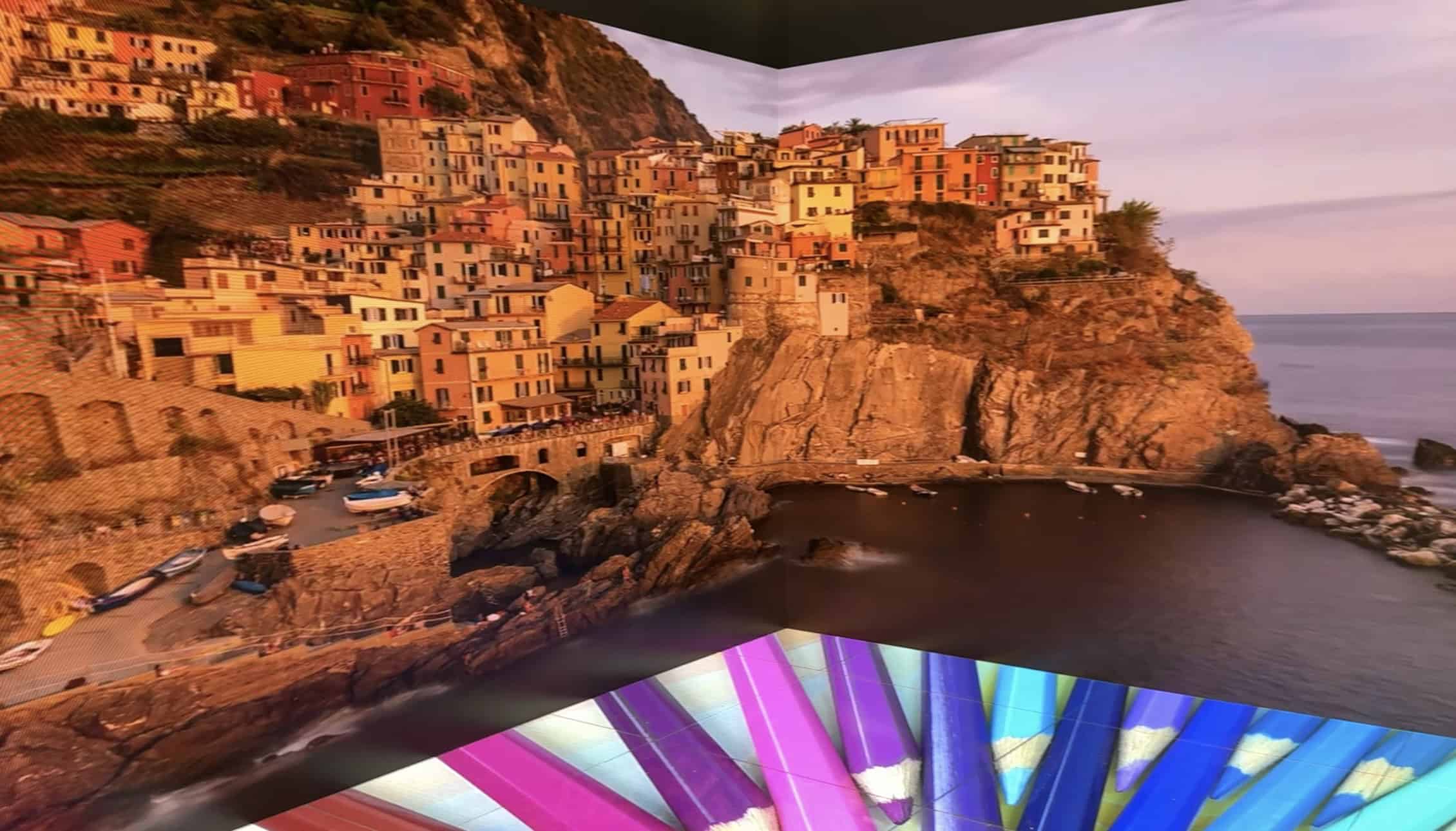
Two 1.9 mm LED walls in an L-shape
The stage is built from DRE Series panels at 1.93 mm pixel pitch. Each wall is 2,304 × 1,280 pixels, which is nine cabinets wide by five high on the DRE’s 256 × 256 pixel, 496 mm cabinet, so each wall measures roughly 4.5 m wide by 2.5 m high. The two walls meet at a right angle, so the background wraps round the performer instead of running out of picture the moment the shot widens.
The L-shape also matters for lighting. Content on the side wall lights the performer from that side in the colour of the scene, which is the effect that makes virtual production look real in camera.
A 2,304 × 2,304 pixel LED floor
The floor uses the same 1.9 mm pitch, nine cabinets by nine, so around 4.5 m square. Performers stand inside the environment rather than in front of it, and the floor can carry a ground plate, water, reflections or a plain colour depending on the scene. Between shoots it doubles as a large flat display for teaching.
NovaStar MX40 Pro processing over 10G fibre
Two NovaStar COEX MX40 Pro controllers drive the canvas through 10G fibre outputs, keeping the three surfaces in sync. Every panel carries an A10s Pro receiver card, which brings HDR support, low latency and pixel-level colour calibration. An ET4000 media server supplies the content, with 8K playback, multiple content layers and mapping to the irregular wall-plus-floor shape. The MX40 Pro is an XR-ready processor: it supports genlock, so the LED can be locked to the camera, and frame rates up to 240 Hz.
Two hallway information screens
Outside the studio, Dynamo installed two LED displays at 1,536 × 960 pixels each. They give the academy digital signage for daily announcements, student showcases and live feeds from events in the stage.
Why 1.9 mm pixel pitch for a school XR stage
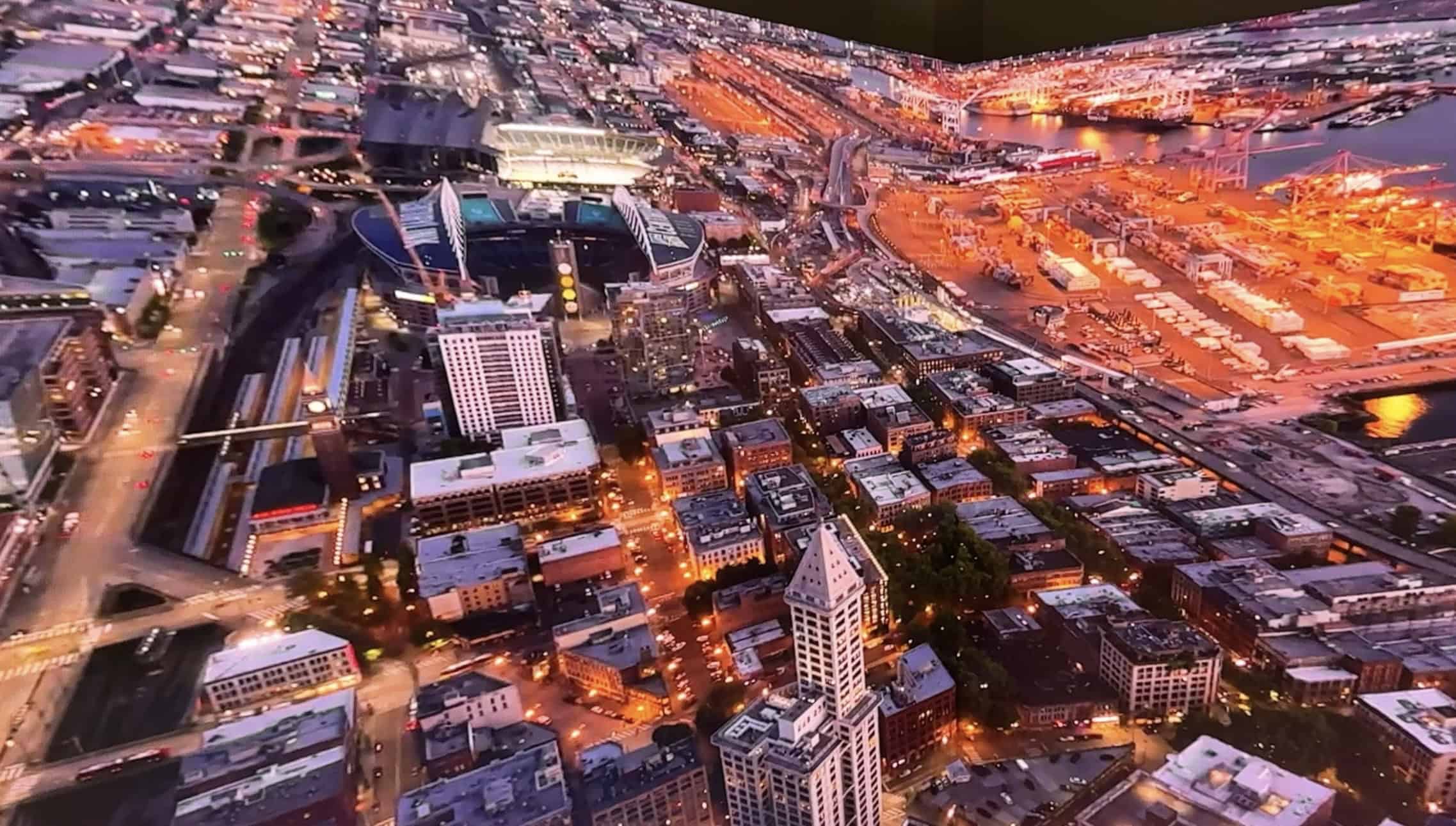
Pixel pitch is the distance between LED centres. The closer the camera and the wider the lens, the finer the pitch has to be before the pixel grid shows in the shot or produces moiré. On a stage this size, with the camera often only a few metres from the wall, 1.9 mm keeps the background clean. The usual rule of thumb is that the minimum comfortable viewing distance in metres is about the pixel pitch in millimetres, so 1.9 mm holds up from around 2 m; our LED viewing distance guide sets out the full method.
The DRE Series datasheet figures behind the choice: 496 × 496 mm cabinets at 9.2 kg, 256 × 256 pixels per cabinet at 1.93 mm, brightness above 800 nits, refresh rate 1,920 to 3,840 Hz, 160° viewing angle and 6,000:1 contrast. The high refresh rate is what stops banding on camera, and the wide viewing angle keeps colour consistent as the camera pans across the corner.
DRE Series is Dynamo’s exhibition and events line, and its cabinets are designed to be built, taken down and rebuilt, which suits a teaching space that will change over time. For a permanent production studio, Dynamo’s XR-optimised DVX and DEX series, which are compatible with Brompton Tessera processing, are also available.
What a complete virtual production stage still needs
Dynamo’s original specification went beyond the LED. Three items were removed to meet the budget, and without them the stage displays static or pre-rendered backgrounds rather than a live, camera-aware environment.
Camera tracking
A Mo-Sys camera tracking system was specified. Tracking tells the render engine where the camera is and where it is pointing, so the background moves with correct parallax as the camera moves. Without it, any camera move reveals that the background is flat.
Unreal Engine and nDisplay
Unreal Engine renders the 3D environment in real time and nDisplay splits that render across the walls and floor. This is the workflow behind productions such as The Mandalorian and it is taught at film schools that run XR stages. Dynamo specified it so students could learn in-camera VFX rather than only playback.
RGB lighting
Dynamo recommended RGB lighting fixtures rather than conventional lights. RGB fixtures can match the colour and level of the scene on the walls, which keeps the light on the performer consistent with the background. It is standard practice on XR stages and was not adopted here.
The LED is the expensive part and it is already in place. Tracking, Unreal Engine integration and lighting can be added in a later phase without changing the walls or floor.
How the academy uses the XR stage
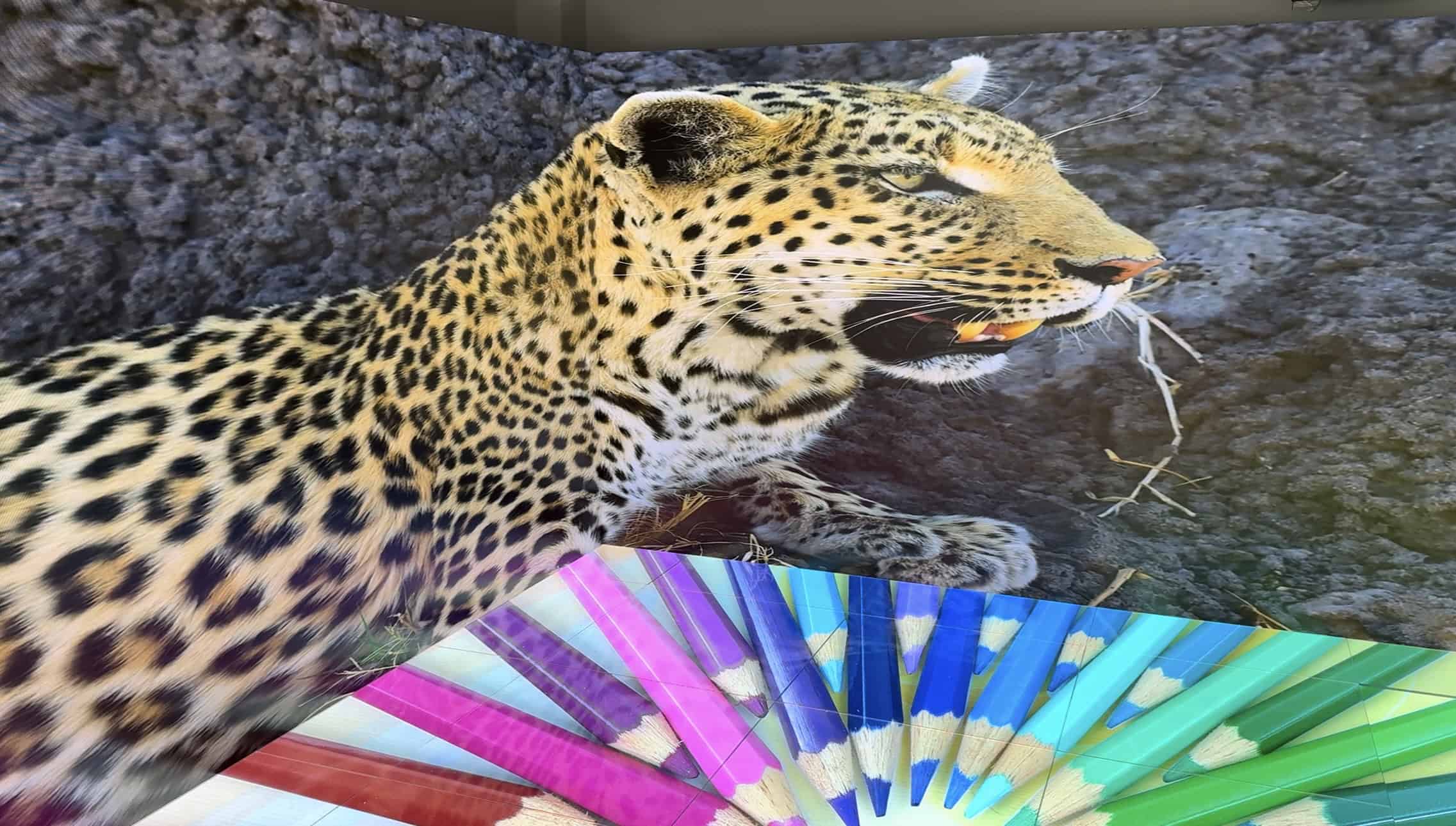
- Film, TV and animation students shoot against realistic backgrounds with live lighting, with far less green-screen work.
- Drama productions change setting instantly without physical set changes.
- STEM and humanities classes can step into historical scenes, scientific simulations and large data visuals.
- The school produces its own marketing and event content in-house.
- Partnerships with East London’s film industry, including training, workshops and possible hire of the space, are open to the academy.
The stage is ready for the full virtual production workflow as soon as the remaining components are added.
Brook Sixth Form XR LED studio: frequently asked questions
Can the Brook Sixth Form XR studio be hired for filming?
The stage belongs to Brook 6th Form & Academy, so any hire or partnership use is the academy’s decision and should be raised with the school directly. If you need an XR or virtual production stage for a shoot, Dynamo supplies virtual production LED screen hire with walls, floor and processing built to the size your production needs.
What pixel pitch does an XR LED studio need?
Most XR stages use between about 1.2 mm and 2.6 mm depending on how close the camera works. Brook’s stage uses 1.93 mm DRE Series panels, which keep the pixel grid invisible from about 2 m. Wide lenses and tight framing push you towards a finer pitch; a large stage where the camera stays back can use coarser panels at lower cost.
Do you need an LED floor for virtual production?
No, but it helps. With walls only, the floor in shot is real studio floor, which limits how low the camera can go and how far the scene can extend. An LED floor lets the ground plane carry the same environment as the walls, so wide shots and reflections work. At Brook the floor is 2,304 × 2,304 pixels at 1.9 mm.
Why does an XR stage need camera tracking?
Because parallax only looks right when the background is rendered from the camera’s actual position. Tracking feeds the camera position and lens data to the render engine, which redraws the scene every frame. Without it the walls can only show fixed or pre-rendered footage. Tracking is the component that turns an LED backdrop into a virtual production stage.
Which LED processors drive the stage?
Two NovaStar COEX MX40 Pro controllers with 10G fibre outputs, one A10s Pro receiver card in every cabinet and an ET4000 media server for playback. The MX40 Pro supports genlock and HDR, and the A10s Pro handles pixel-level calibration, which is what keeps colour consistent across the three surfaces on camera.
How big is the LED stage at Brook Sixth Form?
Each wall is 2,304 × 1,280 pixels, nine DRE cabinets wide by five high, so about 4.5 m × 2.5 m. The floor is 2,304 × 2,304 pixels, nine by nine cabinets, about 4.5 m square. Together the three surfaces carry roughly 11.2 million pixels, which is why the processing is split across two controllers.
Planning an XR or virtual production LED studio?
Dynamo designs, supplies and installs XR LED stages, from a single fine-pitch wall to a wraparound volume with floor, tracking and Unreal Engine integration. See our LED screens for XR and virtual production page and our guide to what an LED virtual production studio is, or browse more Dynamo projects.
Get a quote for an XR LED studio. Tell us the stage size, camera distance and whether you need tracking and rendering, and we will come back with a specification and price. Contact Dynamo LED Displays or call 020 3489 9878.